The tools
Specialized tools inside general-purpose AI chat.
Ledger is a general-purpose AI chat over your agency's own records. Inside it sit specialized tools — FOIA redaction, map-based intelligence, device and media search — that open when the work calls for them. Everything they do is cited, and everything is logged.
Summary table
| Tool | Kind | What it does | Who uses it | What the person decides |
|---|---|---|---|---|
| Chat with your records | AI chatAsk, draft, summarize, compare | Ask questions of reports, carrier returns and case files. Draft, summarize, compare. | Detectives, records, command staff | Every claim cites a page or a row. |
| FOIA redaction | Specialized toolExemption-cited redactions | Proposed redactions on a records packet, each under the exemption it cites. | Records staff | Accept or reject each one, with a reason. |
| Map-based intelligence | Specialized toolRecords and phone data on one map | Report addresses and phone data on one map, filtered and asked in plain language. | Detectives, analysts | What a record can and cannot prove is said out loud. |
| Device and media | Specialized toolSearch inside the warrant's scope | A phone extraction searched by description, inside the warrant's scope. | Digital forensics | A person confirms every finding. |
| Everyday tasks | AI chatSame chat, same log | Elements of the crime, checklists, rewrites, a calculation over a spreadsheet. | Anyone with a login | Same log, same boundary. |
Chat with your records
AI chat
Ask questions of reports, carrier returns and case files. Draft, summarize, compare.
- Who uses it
- Detectives, records, command staff
- The decision
- Every claim cites a page or a row.
- What it will not do
- It does not answer without showing the page or row behind the answer.
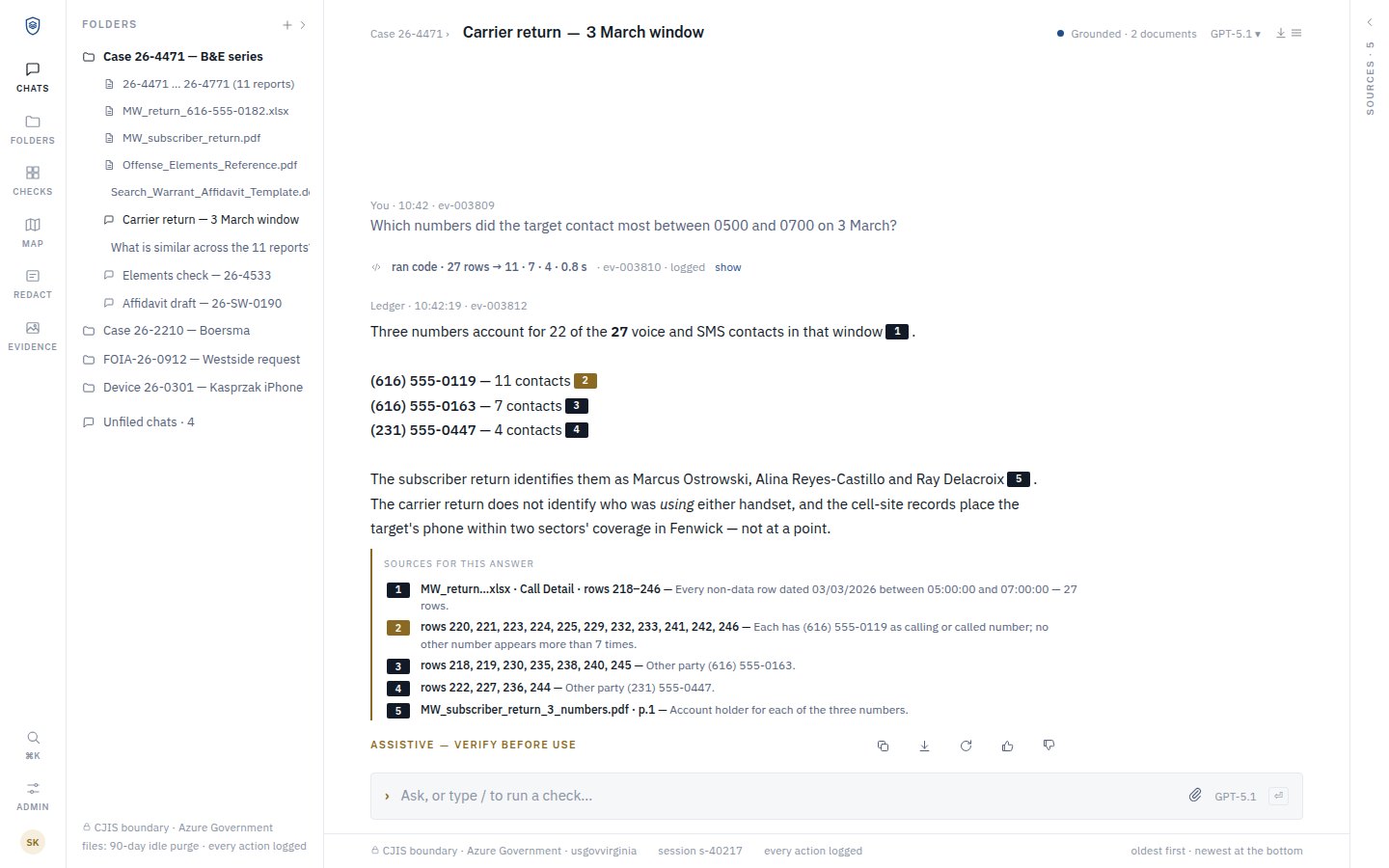
FOIA redaction
Specialized tool
Proposed redactions on a records packet, each under the exemption it cites.
- Who uses it
- Records staff
- The decision
- Accept or reject each one, with a reason.
- What it will not do
- It does not release anything on its own.
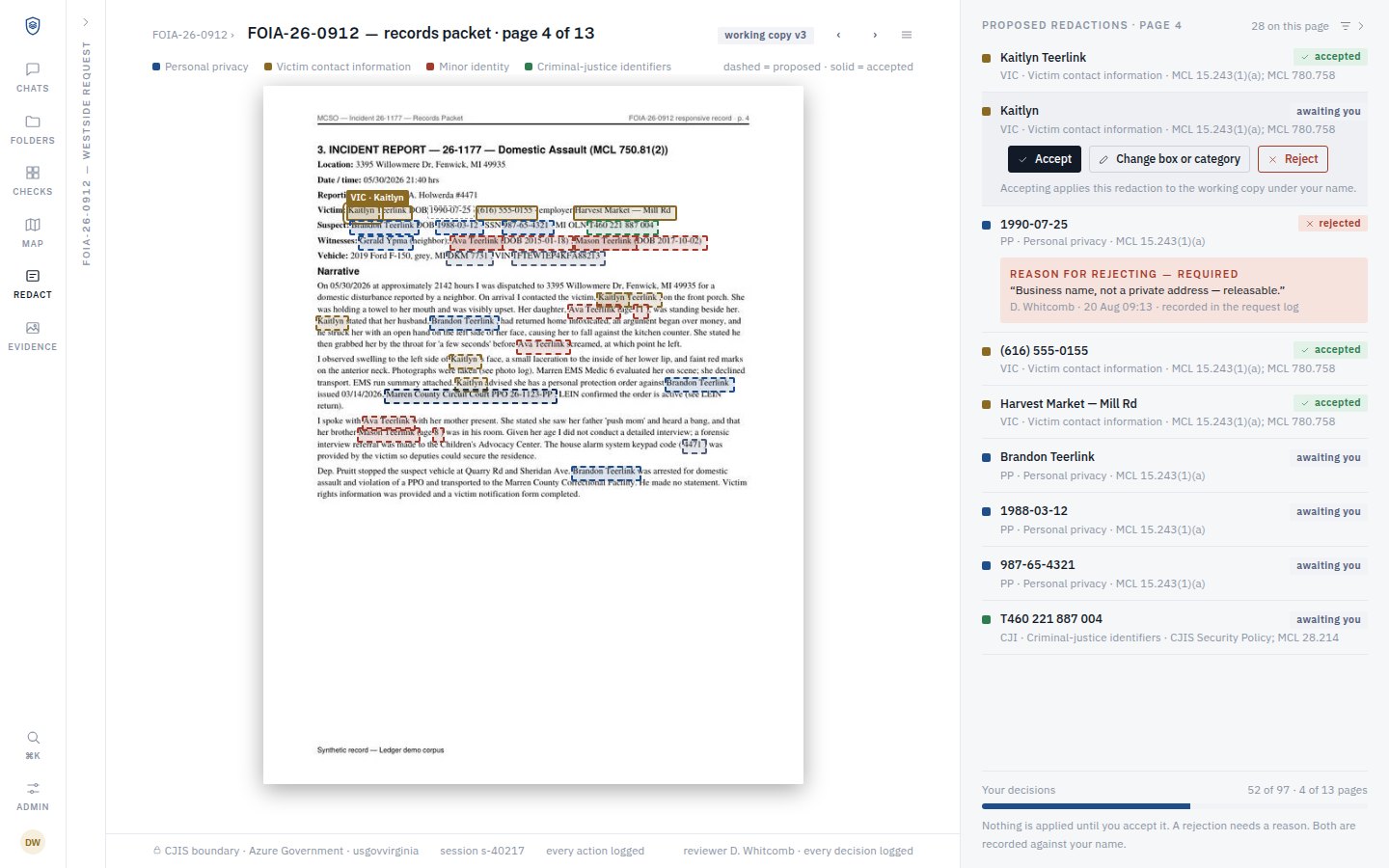
Map-based intelligence
Specialized tool
Report addresses and phone data on one map, filtered and asked in plain language.
- Who uses it
- Detectives, analysts
- The decision
- What a record can and cannot prove is said out loud.
- What it will not do
- It does not place a person at a point from a cell record.
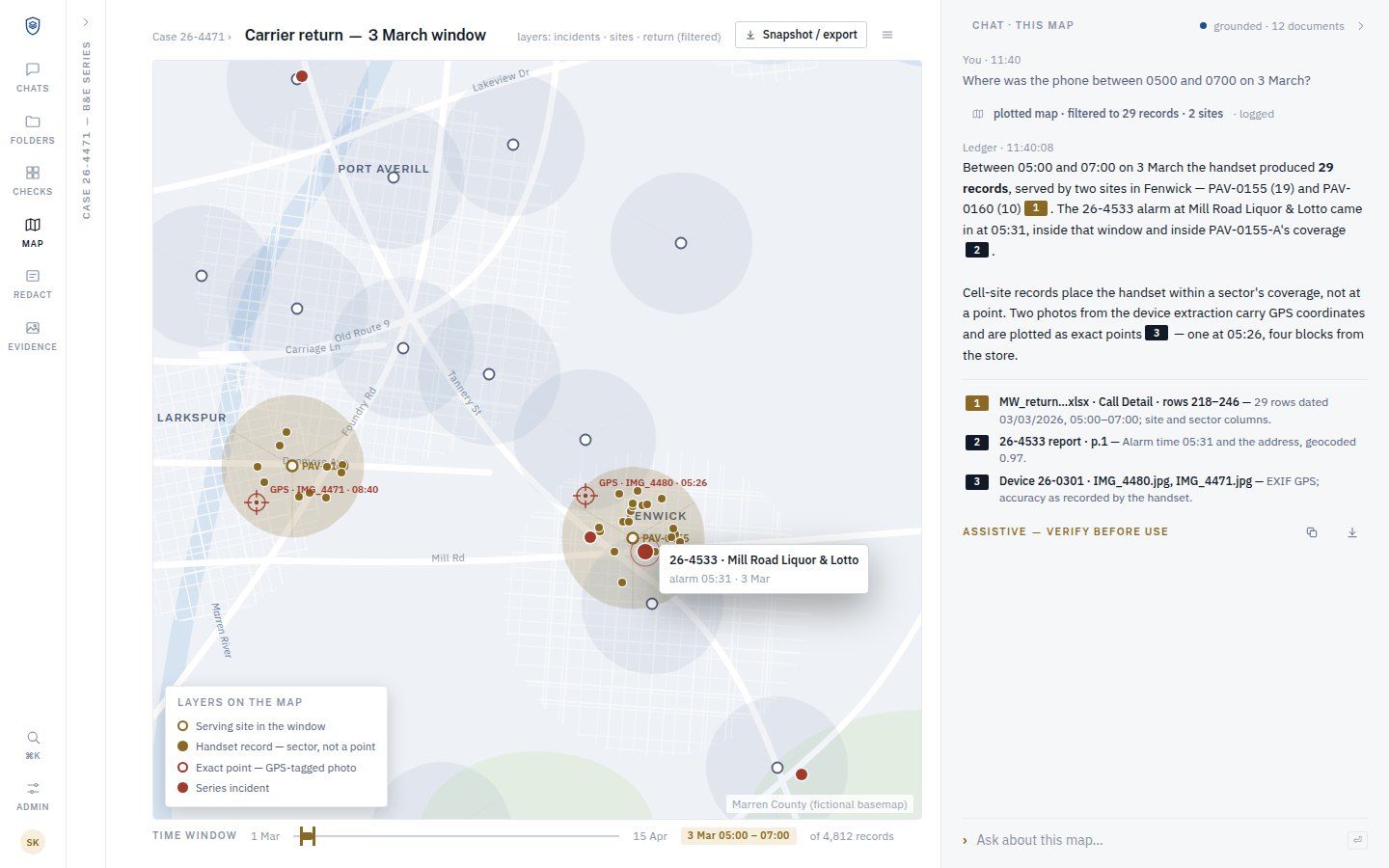
Device and media
Specialized tool
A phone extraction searched by description, inside the warrant's scope.
- Who uses it
- Digital forensics
- The decision
- A person confirms every finding.
- What it will not do
- It never searches outside the warrant scope.
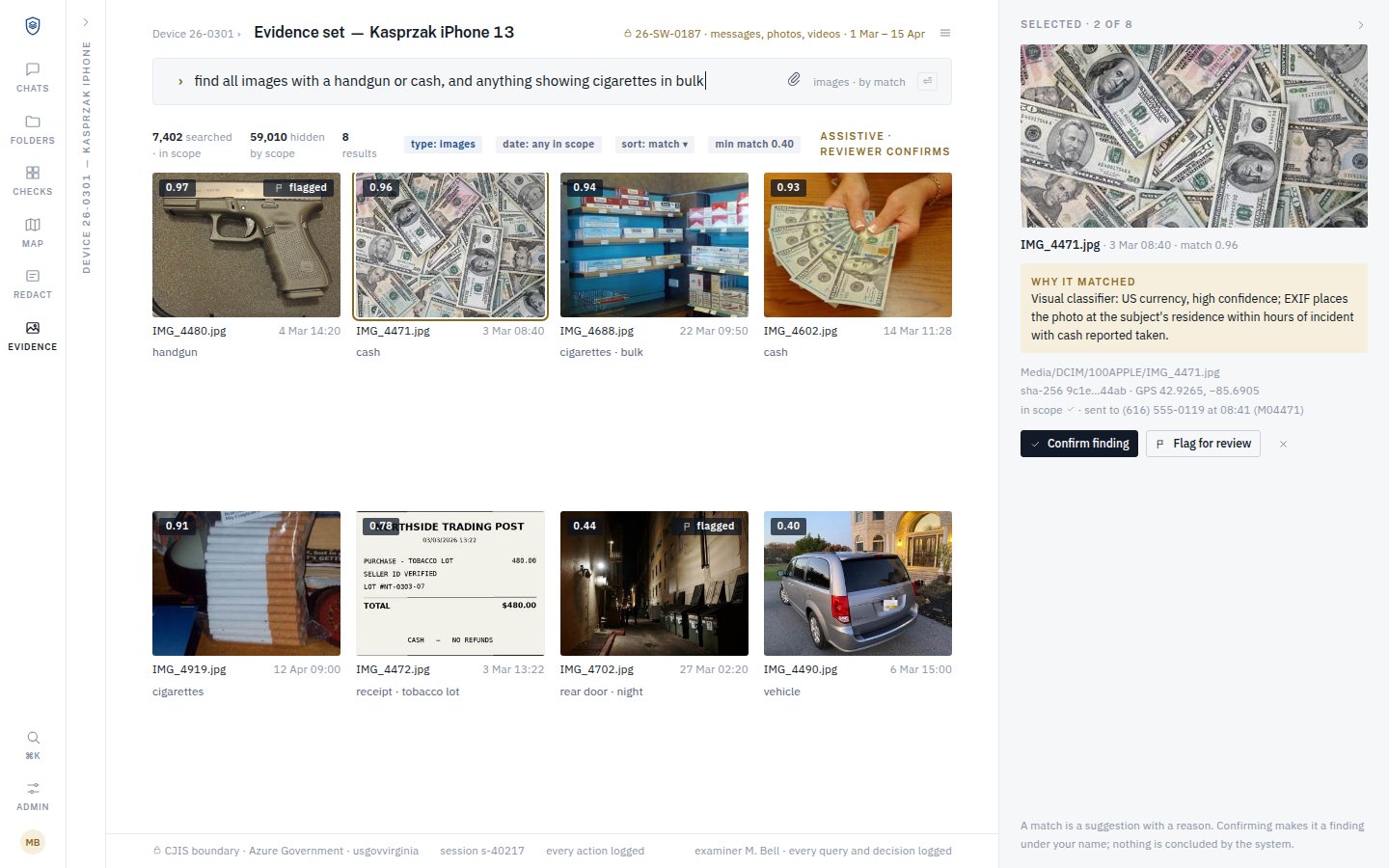
Everyday tasks
AI chat
Elements of the crime, checklists, rewrites, a calculation over a spreadsheet.
- Who uses it
- Anyone with a login
- The decision
- Same log, same boundary.
- What it will not do
- It does not make a decision about any person.